

fixit range logo

Top Rated

24/7 Emergency

Support Available

24/7 Emergency

Support Available
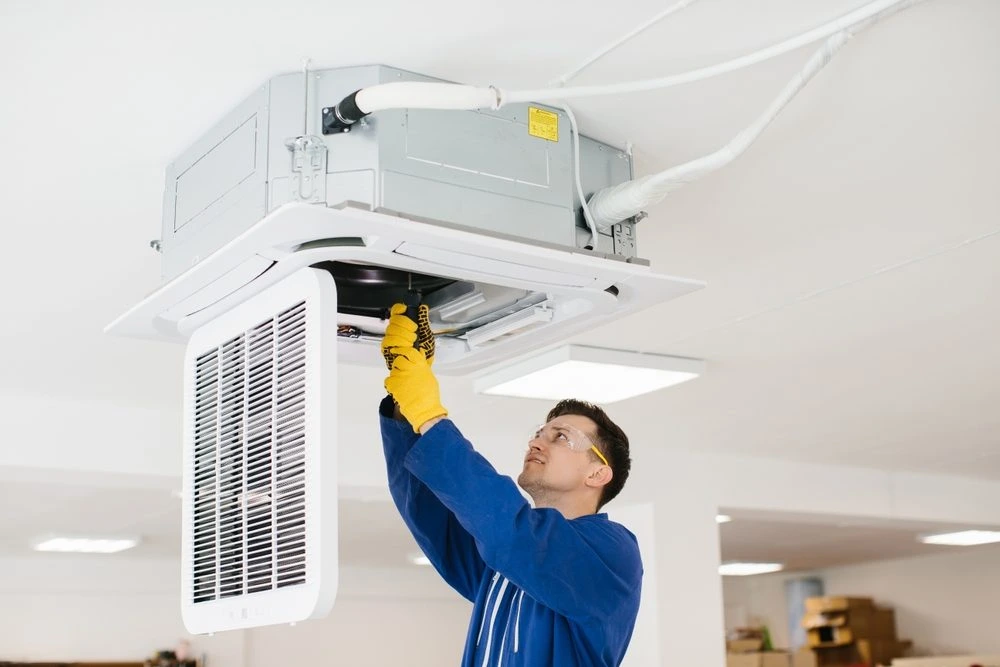
Complete AC Maintenance Guide: Central, Mini Split, and Window Units

Every summer, the same story plays out in homes across the country. The heat climbs, someone cranks the thermostat, and nothing happens. Or worse, something happens but it costs three times what it should on the electric bill. A system that worked fine last year suddenly blows warm air, makes a grinding noise, or leaks water onto the floor.

Most of these breakdowns are completely preventable.

After years of working on air conditioning systems in homes from Texas to Minnesota, the pattern is clear: the systems that fail are almost always the ones that never got proper maintenance. And the ones that run quietly, efficiently, and reliably for fifteen or twenty years? They got looked at regularly by someone who knew what to look for.

This guide covers everything you need to know about AC maintenance for central systems, mini splits, and window units. Whether you want to understand what a professional does during a tune up, figure out what you can handle yourself, or know when it is time to call in a licensed technician, this is the resource you have been looking for.

Fixit Range provides professional on site AC maintenance services across the United States. Our licensed HVAC technicians travel directly to your home or business, wherever you are located.

What Does AC Maintenance Include for Central, Mini Split, and Window Units?

AC maintenance includes cleaning filters and coils, inspecting refrigerant levels, testing electrical components, clearing condensate drain lines, checking thermostat calibration, and measuring airflow. Read our complete guide on what AC maintenance includes for a deeper breakdown of each step.
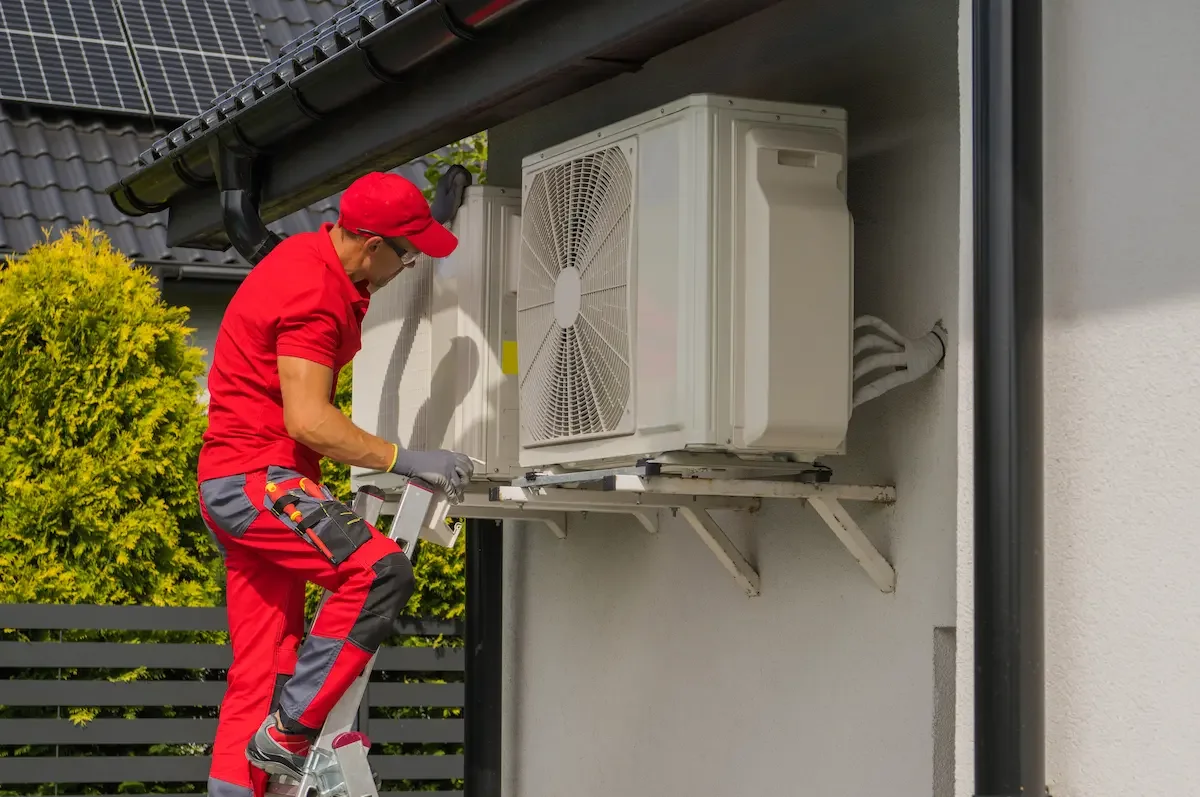
Mini Split AC Maintenance Guide

Section One: Central AC System Maintenance Guide

How Central Air Conditioning Works

A central AC system works by pulling warm air from inside your home through return ducts, passing it over a cold evaporator coil filled with refrigerant, and pushing the cooled air back through supply ducts into every room. The heat absorbed by the refrigerant gets carried outside to the condenser unit, where it gets released into the outdoor air by the condenser coil and fan.
That process repeats hundreds of times every day during summer. Every component has to work in coordination, and any weak link in the chain reduces efficiency, increases energy costs, or causes premature failure.

The Professional Central AC Maintenance Checklist

A thorough central AC tune up covers far more than just swapping a filter. Review
the full AC maintenance checklist for homeowners to understand what a qualified
technician should do during a complete service visit.

Air Filter Replacement

The air filter is the first line of defense for your evaporator coil. A clogged filter restricts airflow, forces the blower motor to work harder, and allows dust to accumulate on the coil. Standard 1 inch filters should be replaced every 30 to 90 days depending on your home environment. Thicker media filters rated at 4 or 5 inches can last 6 to 12 months. During a maintenance visit, the technician checks the filter condition, replaces it if needed, and recommends the right type for your system.

Evaporator Coil Cleaning

The evaporator coil sits inside your air handler or furnace cabinet. Over time, even with a clean filter, dust and debris accumulate on the coil fins. A dirty evaporator coil reduces the system’s ability to transfer heat, which means less cooling, higher energy consumption, and strain on the compressor. Cleaning requires accessing the cabinet, applying coil cleaner, and sometimes using low pressure rinse techniques depending on coil accessibility.

Condenser Coil Service

The outdoor condenser unit is exposed to grass clippings, cottonwood, pollen, dirt, and whatever else the wind carries. The condenser coil fins can become packed with debris, blocking airflow through the unit. Technicians clean the coil from the inside out using appropriate coil cleaner and a garden hose, then straighten any bent fins with a fin comb. This step alone can recover a significant amount of lost efficiency.

Refrigerant Inspection

If pressures are off, leak detection is performed and AC repair may be required.
Under EPA regulations, only certified technicians are legally permitted to handle
refrigerants. Adding refrigerant without fixing the underlying leak is a temporary
fix that delays the inevitable.

Electrical Testing

The electrical side of a central AC system includes the capacitor, contactor, disconnect, blower motor, and various safety switches. Capacitors fail more often than most homeowners realize, and a weak capacitor stresses the compressor motor on every startup. During a maintenance visit, technicians test capacitor values, check contactor condition, inspect wiring for heat damage or corrosion, and verify that all safety controls are functioning.

Thermostat Calibration

A thermostat that reads two or three degrees off costs money every day. Technicians verify that the thermostat is accurately reading room temperature and cycling the system correctly. If you have a programmable or smart thermostat, proper settings can be reviewed as part of the visit.

Condensate Drain Line Cleaning

When your AC cools the air, it also removes humidity. That moisture drips off the evaporator coil and flows into a drain pan, then out through a condensate drain line. Algae and mold love this environment. A clogged condensate drain causes the drain pan to overflow, which can damage ceilings, walls, and floors, and in many systems triggers a safety shutoff that stops the system entirely. Technicians flush the drain line with a biodegradable cleaner and verify it is clear.

Airflow Measurement

Proper airflow across the evaporator coil is critical. Too little airflow and the coil can freeze. Too much and moisture is not adequately removed from the air. A technician checks static pressure and blower motor operation to confirm airflow is within the system’s design range.

Duct Inspection Basics

While a full duct system inspection is a separate service, a technician can check visible duct connections at the air handler for leaks, look for signs of disconnected flex duct, and check supply and return grilles for obstructions. Leaky ducts can waste 20 to 30 percent of the air your system produces before it ever reaches a living space.

How Often Does a Central AC System Need Service?

Once per year is the standard recommendation, ideally in spring before the cooling season begins. Systems that run year round in warm climates, systems that are older than ten years, and homes with pets or dust concerns benefit from twice yearly service. Not sure which schedule fits your situation? Read our guide on annual AC maintenance vs one time tune up to decide what is right for your home.

What Does Central AC Maintenance Cost in the United States?

The average cost for a professional central AC tune up in the United States ranges from $75 to $200 depending on your region, the size of the system, and what the visit includes. Some companies charge more for older systems or add on fees for coil cleaning or filter replacement. At Fixit Range, pricing is transparent and communicated before any work begins.

DIY vs Professional Central AC Maintenance

Homeowners can safely handle filter replacement on a regular schedule and keep the area around the outdoor condenser clear of weeds, grass, and debris. Beyond that, most central AC maintenance tasks require tools, training, and in the case of refrigerant handling, federal certification.
Electrical testing without proper equipment and knowledge carries real risk of injury. Refrigerant handling without EPA 608 certification is illegal. Coil cleaning done incorrectly can damage the fin structure and reduce efficiency further. The cost of professional service is modest compared to the cost of a compressor replacement or water damage from a clogged condensate line.

When to Replace a Central AC System

Most central AC systems last 15 to 20 years with proper maintenance. If your system is over 12 years old and requires a major repair, the math often favors replacement rather than repair. Other signs that replacement makes sense: the system uses R22 refrigerant (phased out and extremely expensive), SEER rating is below 10, or major components have already been replaced once.
Schedule your central AC maintenance with Fixit Range today. Our licensed technicians travel to your home anywhere in the United States. Call now or book online.

Mini Split AC Maintenance Guide

How Ductless Mini Split Systems Differ from Central AC

Mini split systems move refrigerant directly between an outdoor condenser unit and one or more indoor air handler units called heads. There are no ducts. Each indoor head serves a specific zone, which means you can cool individual rooms independently without affecting the rest of the house.

This architecture makes mini splits highly efficient and flexible, but it also means the indoor heads are directly exposed to the room air and accumulate dust, mold, and debris much faster than a central system’s coil hidden inside a cabinet.

Indoor Head Unit Cleaning

The indoor head on a mini split contains a coil, a blower wheel, and filters. The blower wheel in particular collects dust over time and can develop mold growth, especially in humid climates. A professional cleaning involves removing the front panel, removing and washing the filters, cleaning the coil, and cleaning the blower wheel with appropriate tools and cleaners. This is not a task that can be done with a vacuum and a damp cloth. The blower wheel requires specific brushes or low pressure washing to clean properly.

Neglecting the indoor head leads to reduced airflow, unpleasant odors from mold, and eventually coil icing and compressor stress.

Outdoor Condenser Cleaning

Mini split condensers are typically smaller than central AC condensers, but they accumulate the same debris. Cleaning the outdoor condenser coil, checking the fan motor, and inspecting refrigerant line connections are all part of a professional maintenance visit.

Multi Zone System Maintenance
If you have a multi zone mini split system with multiple indoor heads served by a single outdoor unit, each head requires individual attention during a service visit. The system’s refrigerant circuit is more complex, and balancing airflow and refrigerant distribution across zones requires experience with multi zone systems specifically.
Filter Cleaning Frequency
Mini split filters are washable and should be cleaned every two to four weeks during heavy use periods. This is one task homeowners can absolutely handle themselves. Remove the filter, rinse it under running water, let it dry completely, and reinstall it. However, washing the filter does not clean the blower wheel or coil. Professional deep cleaning is still necessary.
Refrigerant Checks
Mini splits use refrigerant in the same fundamental way as central systems. Low refrigerant means a leak, and only EPA certified technicians can legally handle refrigerant. During a service visit, the technician checks operating pressures and inspects refrigerant line connections and flare fittings for signs of leakage.
Condensate Drain Cleaning
Mini split indoor heads produce condensate just like central systems. The drain line is typically smaller in diameter and can clog more easily. A clogged drain causes the unit to leak water down the wall, which is both a water damage risk and a sign that service is overdue.
Twice Yearly Service Recommendation
Because mini split indoor heads are directly exposed to room air, they accumulate contaminants faster than central system coils. Twice per year service, once in spring and once in fall, is strongly recommended for mini split systems, particularly in climates with both heating and cooling seasons since most mini splits serve both functions.
Common Mini Split Problems Caused by Deferred Maintenance
Reduced cooling capacity, water dripping from indoor heads, musty or mildewy odors, ice formation on the indoor coil, error codes on the display, and loud operation are all typical results of skipped maintenance. Most of these problems are completely avoidable with regular professional service.
The Cost of Neglect
A mini split compressor replacement costs $500 to $1,500 or more depending on
the system, and professional AC repair services are often needed urgently. A
clogged condensate line that overflows can cause hundreds or thousands of dollars
in water damage to walls and ceilings.
Schedule your central AC maintenance with Fixit Range today. Our licensed technicians travel to your home anywhere in the United States. Call now or book online.

Window AC Maintenance Guide

Monthly Filter Cleaning

Window AC units pull room air directly through a washable foam or mesh filter before it reaches the evaporator coil. During heavy use months, this filter should be cleaned monthly. Remove it, rinse it under running water, allow it to dry fully before reinstalling, and your system stays efficient and your coil stays clean.

Coil Cleaning

Even with regular filter cleaning, the evaporator coil accumulates dust over a season. No spray coil cleaner is required if you stay on top of filter maintenance, but if the coil looks grey and packed with debris, a no rinse coil cleaner applied according to the label directions will restore heat transfer capacity. The condenser coil on the back of the unit also benefits from cleaning, which can be done with a soft brush and low pressure water from a garden hose.

Checking for Nests and Pests

Window AC units that sit unused for months are attractive nesting sites for insects, mice, and birds. Before firing up a window unit that has been in storage or idle for a season, inspect the unit for nests, insect colonies, or other intrusions. Nests can block airflow, cause electrical shorts, and create fire hazards.
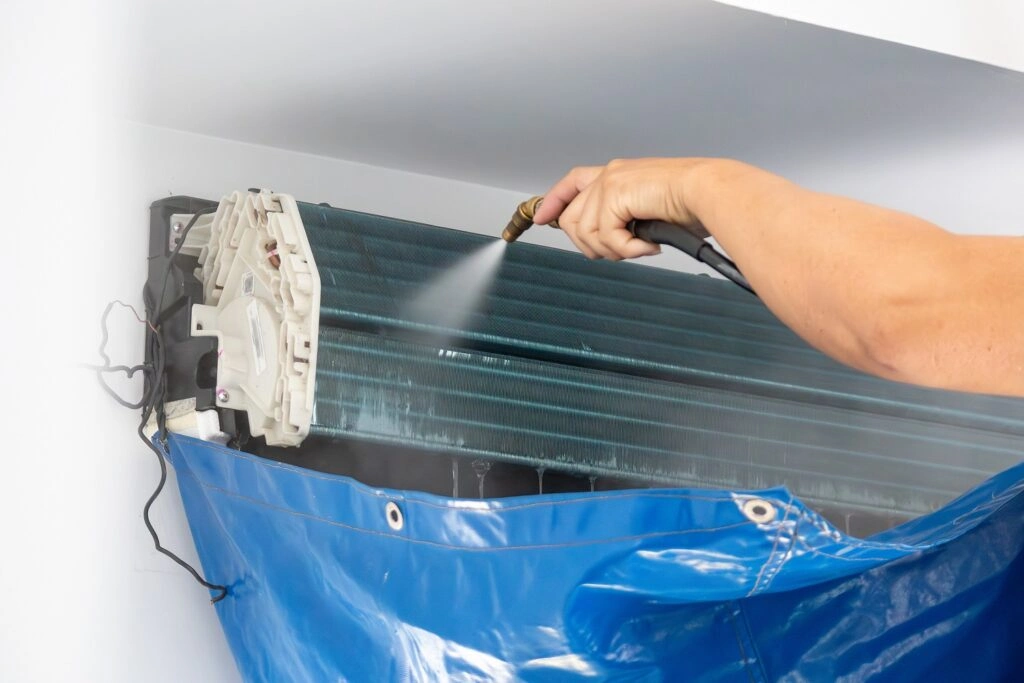
Inspecting Fins
The aluminum fins on both the evaporator and condenser coils can bend during handling, installation, or from debris impact. Bent fins restrict airflow. A fin comb, available at any HVAC supply store, can straighten bent fins and restore airflow. This is a simple DIY task.
Drain Inspection
Window AC units are designed to drain condensate through a small hole at the base of the unit or by slinging it onto the condenser coil for evaporative cooling. Make sure the drain hole is not clogged. A unit that holds water breeds mold and mosquitos and eventually causes premature failure of the sheet metal chassis.
Seasonal Storage
If you remove your window AC for winter, clean it thoroughly before storing it. Store it in an upright position in a dry location. Cover it loosely to prevent dust accumulation while still allowing airflow to prevent moisture buildup inside. Storing a dirty unit ensures mold growth during the storage period.
When to Replace a Window AC Unit
Window AC units typically last 8 to 12 years. Signs that replacement makes more sense than repair include: the compressor runs constantly but cannot maintain the set temperature, the unit uses older R22 refrigerant, the chassis has significant rust, or the cost of a repair approaches half the cost of a new unit.
Energy Impact of Poor Maintenance
A dirty filter alone can reduce a window AC unit’s efficiency by 5 to 15 percent according to the US Department of Energy. A unit with both a dirty filter and dirty coils can consume 20 percent or more additional energy to deliver the same cooling. Over a full summer, that adds up to real money on the electric bill.
DIY Safety for Window AC Units
Window AC maintenance is more accessible to homeowners than central or mini split maintenance. Filter cleaning, fin straightening, drain clearing, and exterior coil cleaning are all reasonable DIY tasks with basic safety precautions. Always unplug the unit before any cleaning or inspection. Never use water near electrical components. Use gloves and eye protection when applying coil cleaner.
When to Call a Professional for Your Window AC
If your window AC is not cooling despite a clean filter and clean coils, if you see ice forming on the unit, if the unit trips the circuit breaker, if it makes grinding or rattling noises, or if it produces a burning smell, stop using it and call a professional. Refrigerant issues, compressor problems, and electrical faults are not DIY territory.
If your window AC is not cooling properly, schedule a professional inspection with Fixit Range. We serve customers across the United States.
Window AC Maintenance Guide

Central vs Mini Split vs Window AC Maintenance Comparison

Central vs Mini Split vs Window AC Maintenance
FactorCentral ACMini SplitWindow AC
Recommended Service FrequencyOnce per yearTwice per yearMonthly filter clean, annual professional check
Maintenance ComplexityHighHighLow to moderate
DIY SuitabilityFilter onlyFilter onlyFilter, fins, drain, exterior coil
Energy Efficiency Impact of NeglectModerate to significantSignificantModerate
Professional Service NecessityStrongStrongFor electrical, refrigerant, coil issues
Average Professional Service Cost (US)$75 to $200$100 to $250 per head$75 to $150
Refrigerant Handling RequiredYes, EPA certified onlyYes, EPA certified onlyRarely, EPA certified if needed

Energy Savings and Cost Impact of Regular AC Maintenance

The financial case for preventive AC service is straightforward. A well maintained air conditioner uses less electricity, lasts longer, and breaks down far less often than a neglected one.

The US Department of Energy estimates that a properly maintained central AC system operates at close to its rated efficiency. A system running with dirty coils, a clogged filter, low refrigerant, and degraded electrical components can lose 25 to 40 percent of its rated efficiency. On a typical household electricity bill, that translates to $100 to $400 in excess annual cooling costs depending on climate and usage.

Compressor protection is the most significant financial benefit of maintenance. The compressor is the most expensive component in any air conditioning system. A central AC compressor replacement costs $1,200 to $2,500 installed. A mini split compressor can run $800 to $2,000. The leading causes of compressor failure are dirty coils causing the system to overheat, low refrigerant causing the compressor to work outside its design parameters, and weak capacitors causing hard starts that stress motor windings over time. Every single one of these causes is addressable with routine maintenance.

Repair cost avoidance compounds over the life of a system. A $150 annual tune up that catches a failing capacitor ($150 part plus labor) before it takes out the compressor ($2,000) represents enormous financial leverage. The same logic applies to catching a small refrigerant leak before it empties the system and causes a warranty voiding compressor burnout.

Replacement delay is another measurable benefit. A central AC system that receives annual professional maintenance routinely reaches 18 to 20 years of service life. A neglected system may fail at 8 to 10 years. The cost of replacing a central AC system early, $4,000 to $12,000 or more depending on home size and equipment, dwarfs a decade of maintenance costs.

Warning Signs Your AC System Needs Maintenance

Signs your AC system needs maintenance:

Your system is telling you something is wrong. Here is what to look for.

  • Warm Air — If the system runs but blows air that is only slightly cool or not cool at all, you likely have low refrigerant, dirty coils, a failing compressor, or a refrigerant metering device problem.
  • High Energy Bills — A sudden increase in electricity costs without a change in usage habits often indicates that the system is losing efficiency. Dirty coils, low refrigerant, and degraded electrical components are common causes.
  • Ice Buildup — Ice on the indoor coil or on the refrigerant lines usually indicates restricted airflow from a dirty filter or coil, or low refrigerant levels. Do not attempt to chip the ice away. Turn the system off, let it thaw, and call a technician.
  • Weak Airflow — Low airflow from supply vents indicates a dirty filter, dirty blower wheel, disconnected or leaking ductwork, or a failing blower motor.
  • Unusual Noises — Grinding and screeching suggest bearing or motor problems. Banging or clanking usually means a loose or broken component inside the system. Bubbling or hissing near refrigerant lines can indicate a refrigerant leak. None of these noises should be ignored. If you hear any of these sounds, contact our 24 hour emergency AC repair team immediately.
  • Water Leaks — Water around your indoor unit or dripping from a window AC or mini split head means the condensate drain is clogged or the drain pan is cracked. Left unaddressed, this causes water damage and mold growth.
  • Bad Smell — Musty or mildew odors indicate mold growth on the evaporator coil, blower wheel, or in the drain pan. A burning smell is an electrical issue that needs immediate professional attention.

DIY vs Licensed HVAC Technician: What You Should and Should Not Do

What Homeowners Can Safely Handle

Replacing standard 1 inch air filters is a basic homeowner task that should be done every 30 to 90 days. Rinsing mini split filters every few weeks during heavy use is similarly straightforward. Keeping the area around the outdoor condenser clear of vegetation and debris takes five minutes and helps the unit breathe. Cleaning window AC filters monthly, straightening visible fins with a fin comb, and inspecting the condensate drain outlet are all within reach for most homeowners.

These tasks matter. They extend maintenance intervals and protect equipment between professional visits.

What Requires an EPA Certified HVAC Technician

Refrigerant handling is federally regulated under Section 608 of the Clean Air Act. Only technicians holding an EPA 608 certification may purchase, add, or recover refrigerants. A homeowner cannot legally add refrigerant to their own system. Attempting to do so with off the shelf products is both legally problematic and technically risky.

Electrical testing and repair involves capacitors that store a lethal charge even when the system is powered off. Working inside the electrical panel of an outdoor condenser or air handler without proper training and lockout tagout procedures is dangerous.

Evaporator and condenser coil cleaning, while it sounds simple, requires the right chemicals, the right technique, and knowledge of how to avoid damaging fin structure or introducing moisture into electrical components.

Leak detection for refrigerant requires electronic leak detectors, UV dye injection, and pressure testing skills developed through hands on training.

The short version: filters and basic cleaning around the unit are DIY territory. Everything else belongs to a licensed professional.

Checking for Nests and Pests

Window AC units that sit unused for months are attractive nesting sites for insects, mice, and birds. Before firing up a window unit that has been in storage or idle for a season, inspect the unit for nests, insect colonies, or other intrusions. Nests can block airflow, cause electrical shorts, and create fire hazards.

Inspecting Fins
The aluminum fins on both the evaporator and condenser coils can bend during handling, installation, or from debris impact. Bent fins restrict airflow. A fin comb, available at any HVAC supply store, can straighten bent fins and restore airflow. This is a simple DIY task.
Drain Inspection
Window AC units are designed to drain condensate through a small hole at the base of the unit or by slinging it onto the condenser coil for evaporative cooling. Make sure the drain hole is not clogged. A unit that holds water breeds mold and mosquitos and eventually causes premature failure of the sheet metal chassis.
Seasonal Storage
If you remove your window AC for winter, clean it thoroughly before storing it. Store it in an upright position in a dry location. Cover it loosely to prevent dust accumulation while still allowing airflow to prevent moisture buildup inside. Storing a dirty unit ensures mold growth during the storage period.
When to Replace a Window AC Unit
Window AC units typically last 8 to 12 years. Signs that replacement makes more sense than repair include: the compressor runs constantly but cannot maintain the set temperature, the unit uses older R22 refrigerant, the chassis has significant rust, or the cost of a repair approaches half the cost of a new unit.
Energy Impact of Poor Maintenance
A dirty filter alone can reduce a window AC unit’s efficiency by 5 to 15 percent according to the US Department of Energy. A unit with both a dirty filter and dirty coils can consume 20 percent or more additional energy to deliver the same cooling. Over a full summer, that adds up to real money on the electric bill.
DIY Safety for Window AC Units
Window AC maintenance is more accessible to homeowners than central or mini split maintenance. Filter cleaning, fin straightening, drain clearing, and exterior coil cleaning are all reasonable DIY tasks with basic safety precautions. Always unplug the unit before any cleaning or inspection. Never use water near electrical components. Use gloves and eye protection when applying coil cleaner.
When to Call a Professional for Your Window AC
If your window AC is not cooling despite a clean filter and clean coils, if you see ice forming on the unit, if the unit trips the circuit breaker, if it makes grinding or rattling noises, or if it produces a burning smell, stop using it and call a professional. Refrigerant issues, compressor problems, and electrical faults are not DIY territory.
If your window AC is not cooling properly, schedule a professional inspection with Fixit Range. We serve customers across the United States.

Why Homeowners Across the United States Trust Fixit Range

Choosing an HVAC company is not just about price. When someone comes into your home and works on equipment that controls your comfort, safety, and energy costs, credentials and professionalism matter.

  • Licensed HVAC Technicians — Every Fixit Range technician holds the state licensing required to work on HVAC systems in their service area. Licensing requirements vary by state, and we comply with all applicable regulations wherever we work.
  • EPA Certified Refrigerant Handling — Our technicians hold EPA 608 certification, which is required by federal law for anyone who handles refrigerants. You can be confident that your system’s refrigerant is being managed correctly and legally.
  • Fully Insured Professionals — Fixit Range carries liability insurance and worker’s compensation coverage. You are protected if anything goes wrong during a service visit.
  • Years of Field Experience — Our technicians are not fresh out of trade school. They have worked on hundreds of systems in real homes and businesses, which means they recognize unusual situations and diagnose problems accurately.
  • Nationwide AC Maintenance Service Coverage — We travel to customers across the United States, from major metropolitan areas to rural locations. You do not have to settle for whoever happens to operate in your town.
  • Transparent Pricing — Before any work begins, you know what it costs. There are no surprise charges added after the job is complete.
  • Written Maintenance Reports — After every service visit, you receive a written report of what was inspected, what was found, and what was done. That documentation protects you and helps track system health over time.
  • Customer Satisfaction Guarantee — We stand behind our work. If a maintenance task we performed does not meet your expectations, we address it.
  • Compliance with Federal and State Safety Standards — Every service visit is performed in compliance with applicable safety codes and environmental regulations, including EPA refrigerant rules and OSHA safety guidelines.

FAQ: AC Maintenance Questions Answered for Voice Search

How often should AC be serviced?

Central and mini split systems should be professionally serviced once per year at minimum, ideally in spring before cooling season. Mini splits in dual use heating and cooling climates benefit from twice yearly service. Window units need monthly filter cleaning and an annual professional check if in heavy use.

Schedule Professional AC Maintenance Today

Your air conditioning system works hard every day to keep your home comfortable. It deserves the same level of attention you give your car.

Fixit Range provides complete professional AC maintenance for central systems, mini splits, and window units across the United States. Our licensed, EPA certified technicians come to you. No need to transport equipment or coordinate drop offs. We show up at your home or business, do the work right, and leave you with a written report.

Why schedule with Fixit Range:
  • Nationwide on site service with technicians who travel to you, not the other way around.
  • Certified HVAC professionals with the training and tools to service any system, any brand.
  • Fast scheduling so you are not waiting weeks for an appointment.
  • Same day availability in many areas across the country.
  • Transparent pricing with no surprise charges.
  • Written maintenance documentation after every visit.

Do not wait for your AC to break down on the hottest day of the year. Preventive maintenance costs a fraction of emergency repair costs and protects an investment that keeps your family comfortable.

Call Fixit Range now or book your appointment online at fixitrange.com.

Final Note

A well maintained air conditioner is one of the most cost effective investments a homeowner can make. The difference between a system that runs reliably for twenty years and one that fails unexpectedly at ten usually comes down to regular professional attention.

Fixit Range sends certified HVAC technicians directly to homes and businesses across the United States. Whether you have a central air conditioning system, a ductless mini split, or a window unit, our team performs complete AC maintenance with the professionalism, documentation, and guarantee that the job is done right.

Schedule your service today at fixitrange.com.